

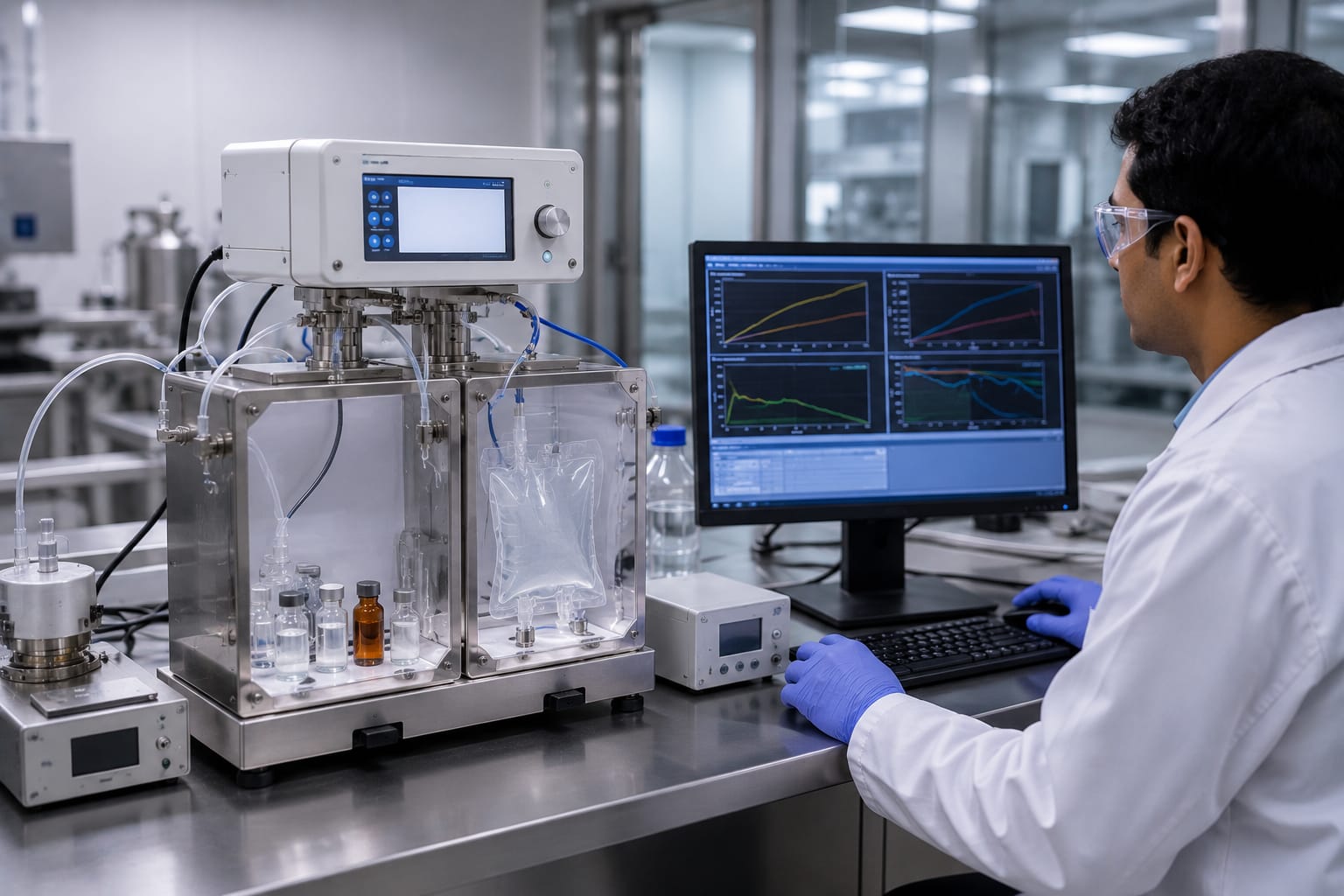
High-Precision Machine Qualification Kits for Automated Visual Inspection
Ensure seamless calibration, peak optical performance, and full regulatory compliance for your high-speed packaging lines with an advanced avi qualification kit from FTI Incorporation, a leading knapp test kit manufacturer. As pharmaceutical manufacturing shifts toward high-speed production, validating your inspection machinery requires standardized, reproducible defect sets capable of challenging camera resolution, light-source intensity, and algorithm thresholds.
Our specialized test standards streamline your entire automated visual inspection qualification routine. Designed to meet stringent international cGMP, USP <1790>, and EU GMP Annex 1 guidelines, these kits enable reliable machine setup, daily operational checks, and routine system re-qualification.
Why Every High-Speed Packaging Line Needs an AVI Qualification Kit
Automated inspection systems rely on complex vision algorithms to differentiate between benign product characteristics (such as air bubbles or silicone oil) and critical contaminants. Deploying a certified avi qualification kit allows engineers to establish consistent baseline parameters, eliminate false reject spikes, and prevent defective containers from reaching commercial distribution.
A false reject rate (FRR) that drifts upward quietly erodes yield and inflates manual re-inspection costs, while a drop in true-positive detection risks releasing defective units. A calibrated AVI qualification kit lets engineers balance these two outcomes objectively, holding the machine to the same Reject Zone Efficiency standard a qualified human inspector would meet.
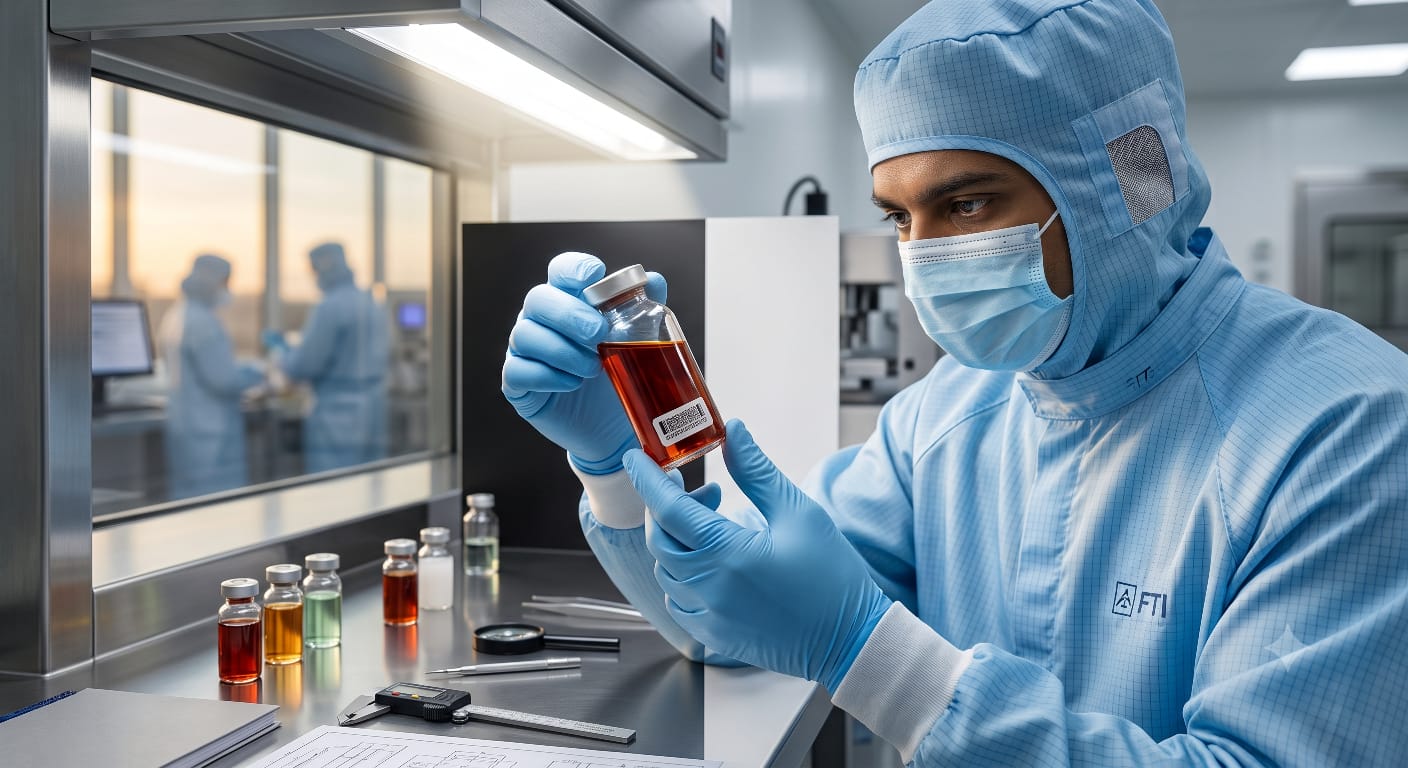
At FTI Incorporation, each avi qualification kit features precisely positioned, micro-sized defects sealed within identical production containers. Key benefits include:
- Camera & Sensor Calibration: Precisely calibrated particle sizes and container cosmetic flaws to challenge high-resolution camera lenses.
- Algorithmic Verification: Standardized defect libraries that help optimize image processing software and neural network detection models.
- Traceable Documentation: Full certificates of analysis (CoA) detailing particle dimensions, fluid viscosity, and defect coordinates for audit readiness.
- Multi-Container Support: Available in vials, ampoules, cartridges, and prefilled syringe geometries.
Mastering Automated Visual Inspection Qualification
Executing a compliant automated visual inspection qualification protocol involves validating system sensitivity across initial installation (IQ), operational setup (OQ), and ongoing performance (PQ) phases. Without calibrated reference standards, determining exact machine sensitivity limits becomes subjective and prone to audit citations.
By partnering with FTI Incorporation, your team gains access to test standards custom-tailored to your specific machine architecture. Whether you operate spin-window systems, high-speed camera stations, or X-ray inspection modules, our defect sets ensure your automated visual inspection qualification process yields objective, repeatable data. Our kits are also used during Factory Acceptance Testing (FAT) and Site Acceptance Testing (SAT), so inspection equipment is challenged with representative defects before it is ever released into GMP production.
Determining System Sensitivity with a Probability of Detection Kit
Calculating statistically valid Probability of Detection (POD) curves is a core requirement of modern pharmaceutical validation. A calibrated probability of detection kit provides a gradient of defect sizes—from sub-visible micro-particles up to critical macro-flaws—mixed with certified defect-free controls.
Utilizing a dedicated probability of detection kit enables your validation team to:
- Establish POD Thresholds:Accurately plot detection rates against defect sizes to identify exact 90%/95% confidence limits.
- Compare Manual vs. Machine Performance: Conduct side-by-side comparative studies using a standardized visual inspection challenge set to satisfy regulatory demands for automated system equivalence.
- Monitor Machine Drift: Perform routine daily or shift-based verification runs to ensure optical lenses, lighting components, and mechanical handling mechanisms remain within validated operational ranges.
Partner with FTI Incorporation for Machine Qualification Standards
FTI Incorporation is a trusted partner for global pharmaceutical companies, contract packaging facilities, and automated inspection equipment manufacturers. We build tailored challenge standards that ensure your automated inspection hardware operates at peak efficiency while maintaining total compliance with USP <1790> and Annex 1 standards. We regularly collaborate with OEMs and integrators during equipment commissioning, giving your project team a single source for the reference defects that qualification demands.
Our Machine Qualification Capabilities:
- Custom defect sample creation matching your exact container and liquid media specifications.
- High-speed spin-compatible container construction.
- Expert technical support for establishing automated visual inspection qualification and POD testing protocols.

Frequently Asked Questions
An avi qualification kit is specifically engineered to withstand the mechanical stress of high-speed automated machinery (such as rapid spinning and mechanical gripping) while presenting defects in orientations optimized for camera sensors and light sources.
A probability of detection kit contains a precise range of defect sizes that allow vision engineers to fine-tune image contrast thresholds, reducing false rejection rates while guaranteeing the detection of critical defects.
Our test sets provide known reference defect standards used during Installation Qualification (IQ) to align camera optics, Operational Qualification (OQ) to establish threshold limits, and Performance Qualification (PQ) for routine operational checks.
Yes. Every container in an avi qualification kit is engineered with reinforced seals and fluid matrices designed to endure repetitive high-rpm rotation without altering particle geometry or creating false bubbles.
We supply standards in standard glass vials, ampoules, cartridges, and prefilled syringes. We can also manufacture test sets using your facility’s specific container stock to mirror operational conditions.
By running a balanced ratio of certified defect-free controls alongside defect samples from a probability of detection kit, vision engineers can determine the system’s exact true-positive vs. false-positive detection rates.
Each kit is delivered with a complete Certificate of Analysis (CoA) containing microscopic particle sizing measurements, liquid viscosity data, spatial defect locations, and lot-level traceability records.
Qualification sets should be utilized during initial machine calibration, after major software updates or camera lens adjustments, and as daily or shift-based positive verification controls.
Yes. Running a representative defect set during Factory and Site Acceptance Testing confirms a new machine meets its detection specification before it enters GMP production, reducing costly surprises during formal qualification.
Regulators expect an automated system to perform at least as well as a qualified manual inspector. Using the same characterised defects and POD basis for both — via a shared visual inspection challenge set — lets you demonstrate equivalence with objective, like-for-like data.
Elevate Your Machine Validation Standards
Contact FTI Incorporation today to speak with a technical specialist or request a custom quote for your automated inspection machinery standards.