


Certified CCIT Challenge Kits & Container Closure Integrity Validation Solutions
Ensure absolute sterility, barrier integrity, and compliance across your parenteral packaging lines with a certified ccit challenge kit from FTI Incorporation. Container closure integrity testing (CCIT) is a fundamental regulatory requirement for sterile drug products, ensuring that packaging prevents microbial contamination and preserves product stability over its shelf life.
A breach in the container closure system — however small — can admit microorganisms, moisture, or gas, compromising sterility long before any visible sign appears. This is why regulators increasingly expect deterministic, quantitative CCIT methods supported by traceable reference standards rather than subjective probabilistic checks.
Whether you are validating high-sensitivity deterministic test methods—such as Vacuum Decay, High Voltage Leak Detection (HVLD), Mass Extraction, or Headspace Analysis—or performing routine verification, our precision-engineered container closure integrity test kit standards deliver reproducible, quantifiable results.
The Role of a Precision CCIT Challenge Kit in Sterility Assurance
Maintaining seal integrity across primary packaging (vials, ampoules, cartridges, and prefilled syringes) is critical to avoiding micro-leaks that jeopardize drug purity. Utilizing a calibrated ccit challenge kit enables pharmaceutical quality control laboratories to validate instrument limit of detection (LOD) and establish reliable baseline calibration curves.
Container closure integrity is not a one-time check but a lifecycle commitment that spans package development, method validation, routine release, and stability monitoring. A properly designed challenge kit supports every one of these stages, giving your laboratory a single, traceable reference against which instrument performance can be demonstrated year after year.
At FTI Incorporation, each ccit challenge kit is manufactured using micro-drilled laser orifices or calibrated capillary channels. This guarantees known, precise calibrated leak standards with leak sizes ranging from sub-micron levels up to larger defect thresholds required for comprehensive method validation.
Engineered Container Closure Integrity Test Kit Solutions
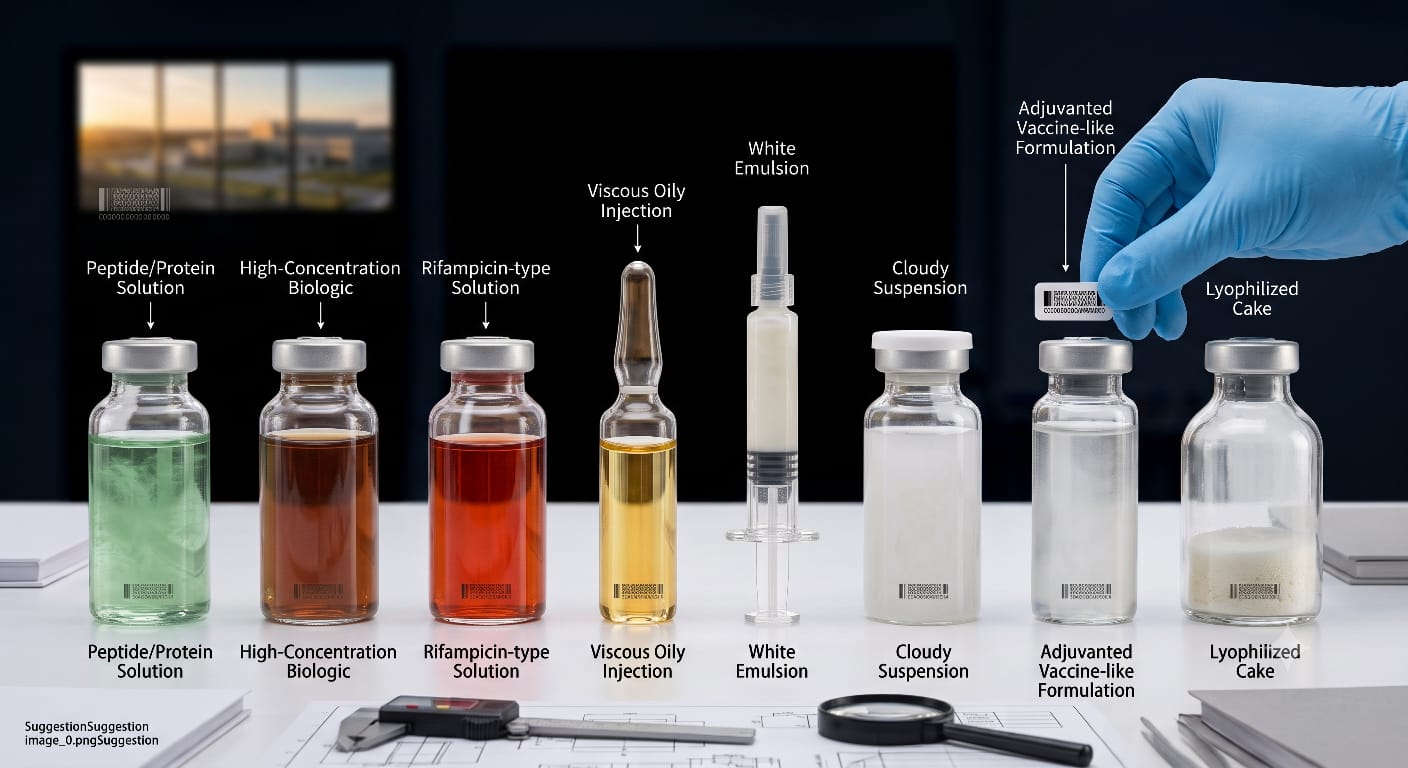
Different packaging formats and drug formulations present distinct physical challenge requirements. Our custom-designed container closure integrity test kit standards are tailored to match your specific container materials, stopper formulations, and crimping parameters.
Key features of our challenge standards include:
- Calibrated Micro-Leaks: Traceable laser-drilled micro-holes ranging from 1 µm to 50+ µm, allowing you to challenge instruments right down to the maximum allowable leakage limit (MALL) relevant to your product.
- Deterministic Method Compatibility: Fully compliant with USP <1207> guidelines for Vacuum Decay, Pressure Decay, Mass Extraction, and HVLD testing, and aligned with PDA Technical Report 27 best practice.
- Traceable Certification: Every container closure integrity test kit comes with full documentation, including precise flow rates and dimensional measurement verification.
- Format Versatility: Available for liquid-filled containers, lyophilized products, empty primary packaging sets, and dedicated prefilled syringe defect kit formats.
Positive and Negative Controls for a Complete Validation Package
A defensible CCIT method validation rests on more than a single leak size. Our kits can be configured with a gradient of calibrated positive controls alongside certified negative (no-defect) controls, enabling you to map the full sensitivity curve of your instrument, establish statistically valid detection limits, and demonstrate that the method correctly accepts intact units while reliably rejecting breached ones. This balanced design is what transforms a set of samples into an audit-ready validation package.
Why Choose FTI Incorporation for Your CCIT Validation Needs?
FTI Incorporation is a leading provider of pharmaceutical validation standards, empowering drug manufacturers and contract facilities to meet global regulatory expectations, including USP <1207> and EU GMP Annex 1 requirements.
Our engineering team works directly with your Quality Assurance department to build custom challenge standards that match your exact packaging geometry, ensuring seamless integration into your routine testing protocols. Because our standards are produced in-house using controlled laser-ablation technology, we can match unusual container materials, wall thicknesses, and closure systems that off-the-shelf standards rarely accommodate.